Every year, as the days shorten and a familiar chill fills the air, I feel a growing sense of anticipation. These indicators tell me that it's time to hit up the Manistee River or the Pere Marquette River, for some fall salmon spawning action.
My dad used to go AWOL from work on days like this. He'd load up his pickup truck camper with the things he'd need and off he'd go, his mind bent on tying into a 25-pound fish on a mission. He knew that hooking into one of these determined fish would result in a thrilling fight as the powerful salmon pulled line from his reel.
Michigan's salmon live most of their lives in the Great Lakes and return to their "home" rivers to spawn. As they spend time in those rivers, their silver bodies lose the shine and start to darken up.
The Three Stages of the Spawning Run
There are three stages to the spawning run.
During the Early Run (Late August - Early September,) fish are fresh, bright, and powerful. They are often staging in the river mouths and lower sections, just beginning to move upstream. This is a great time to catch a "chrome" fish for the dinner table. This is my favorite time to fish for them.
River salmon are fresh from the Great Lakes and full of fight. Unlike their lake counterparts in the big water, they are often in peak physical condition and can make powerful, line-stripping runs in the current.
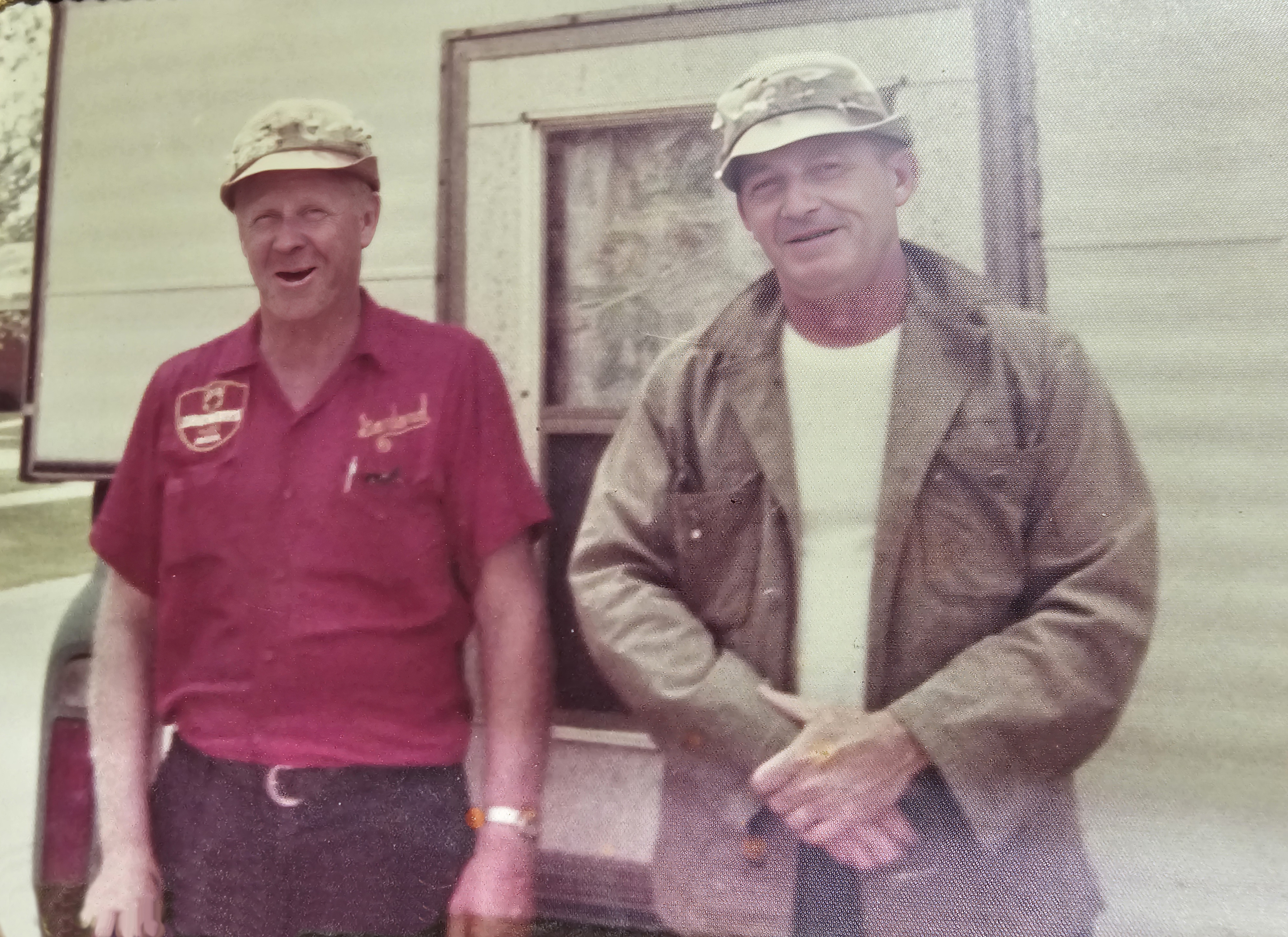
This fall salmon trip had them headed to the Muskegon River. Photo: Loanna Ammerman
My dad used to target the Peak Run (Mid-September - Early October.) He knew that the numbers of spawning salmon are much higher, increasing his chances at hooking one. These fish are no longer actively feeding. They're reacting to nearby lures and getting hooked with their territorial strikes.
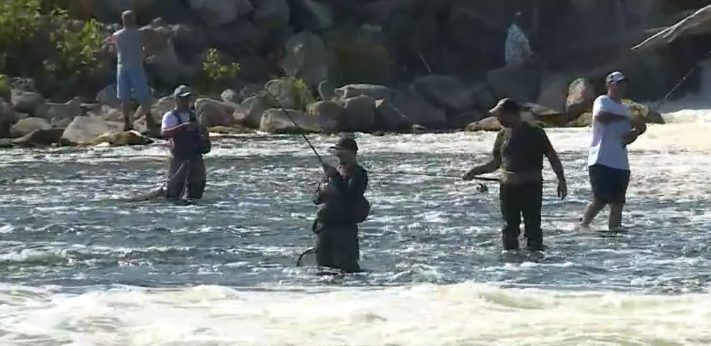
You won't be alone on the river at this stage of the run. There will be lots of others trying to catch a salmon as well. It's a fun atmosphere!
The Late Run (Late October - November) is the winding-down phase. The main run is over. Fish are actively spawning on gravel beds. The focus for many anglers shifts to targeting these "zombie" or "boot" fish, which are no longer good for eating but still provide a challenging fight.\
My friend, Ron Murray, used to love fishing this time of year. He would be after the steelhead that follow the spawning salmon up the river. The steelhead feed on the salmon eggs. Can you guess what his preferred bait was? Although he was targeting the steelhead, he was happy catching a dark salmon as a bonus fish.
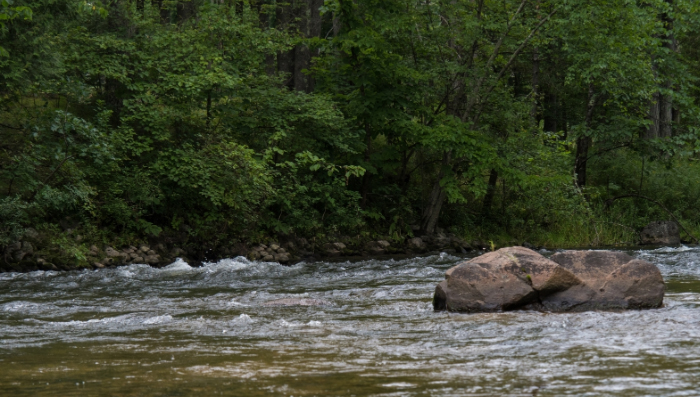
Key Factors Affecting Run Timing
Water Temperature: This is the single most important factor. Salmon are sensitive to temperature and will wait in the cooler waters of the lake until river temperatures drop into the 60s Fahrenheit. When that landmark temperature hits, here they come!
Rainfall and Water Levels: Rain can trigger a run. A good rain event increases water levels and provides a "pull" for the fish to move upstream.
Daylight: Just as I mentioned earlier, the shortening days tell me when "it's time!" The changing length of days in the fall also plays a role in signaling the salmon's biological clock. As the days shorten in the fall, the decreasing amount of daylight triggers hormonal changes within the salmon's body. These hormones, in turn, initiate the physical and behavioral transformations necessary for spawning.
This biological clock is so strong that even if other factors like water temperature or rainfall are not ideal, the shortening days will eventually compel the salmon to begin their journey. This is why you will see salmon in the rivers in a predictable cycle every fall, regardless of year-to-year weather variations.
Which rivers should you target?
Although Salmon are regularly caught in Lake Huron, the west side of the state produces the best river fishing.
The major rivers that river salmon fishermen frequent in Michigan include:
- The Manistee River (especially the "Big Manistee"): Often considered the most famous and productive salmon river in the state. The section below Tippy Dam is a major hotspot, as the dam acts as a natural barrier, concentrating large numbers of fish.
- The Pere Marquette River: A designated "Wild and Scenic River" known for its natural beauty and a healthy run of both Chinook and Coho salmon. It's especially popular with fly anglers.
- The Betsie River: A smaller, more intimate river that offers excellent opportunities, particularly around the Homestead Dam. It's a favorite for anglers who prefer a more tranquil setting.
- The Muskegon River: This river has a strong reputation for salmon and steelhead. Although I don't believe that it receives Chinook salmon plants, the river's self-sustaining population provides thousands of fish each year.
- The Grand River: As Michigan's longest river, it provides a unique urban fishing experience, especially in downtown Grand Rapids near the Sixth Street Dam, which is a major staging area for migrating salmon.
- The St. Joseph River: Located in the southwestern part of the state, it's a key river for both Chinook and Coho salmon runs.
- The Platte River: Famous for having one of Michigan's largest Coho salmon runs, especially near the Platte River State Fish Hatchery.
- The St. Marys River (Upper Peninsula): While it gets runs of Chinook and Coho, it's particularly well-known for its excellent fishery for pink salmon and Atlantic salmon.
No matter which river you choose to fish, the best time to fish for river salmon is often during low-light conditions - at dawn and dusk. This is when the fish are typically most active and can be less spooked by fishing pressure.
Safety First
River fishing, especially in fast currents, can be dangerous. Essential safety gear includes waders with good traction, a wading belt, and a wading staff for stability. Wearing polarized sunglasses is also crucial for spotting fish and reading the riverbed.
For safety's sake, don't fish alone, but if you find a spot where you're really alone and there are no other fishermen in the river - and you're catching fish - please let me know your spot!