For Michigan turkey hunters, the spring season has always been the main event. It's a season defined by the thunderous gobble echoing through the pre-dawn woods, the delicate art of seduction with a turkey call, and the heart-pounding sight of a strutting tom in full display. For decades, the fall hunt was a more limited affair, a small opportunity available only in certain parts of the state.
Well, that's all changed. In a move that has turkey fanatics across the state buzzing, the Michigan DNR has opened nearly the entire state to fall turkey hunting.
A whole new season of opportunity is upon us, but it's a completely different game with its own unique set of strategies, challenges, and, most importantly, its own set of rules.
This isn't just spring hunting with crunchy leaves. The tactics are different, the birds behave differently, and the regulations are tailored to a different kind of hunt. So, before you grab your turkey call and head for the woods this fall, let's walk through what you need to know to stay legal, be effective, and make the most of this exciting second season.
A Whole New Game: Fall vs. Spring
The first thing to understand is the fundamental difference in turkey behavior. In spring, a gobbler's world revolves around breeding. He's loud, he's arrogant, and he wants to gather as many hens as he can. Our tactics are designed to imitate a lonely hen and exploit his desire to mate.
In the fall, the script is flipped. The breeding season is a distant memory. The turkeys' world now revolves around two things: food and the security of the flock. Toms, jakes, and hens group up into separate flocks, establishing a pecking order and focusing on packing on weight for the coming winter. They are generally quieter, more cautious, and aren't responding to seductive hen yelps. Fall hunting is less about romance and more about understanding the flock's social structure and daily patterns. This behavioral shift is the reason behind many of the season's specific rules.
Before You Hit the Woods
Before you can even think about tactics, you need to get your license in order. The DNR has simplified the management units for the fall. The entire Upper Peninsula is now designated as Turkey Management Unit M. The entire Lower Peninsula, with the single exception of Monroe County (which is closed to fall turkey hunting), is now Turkey Management Unit I.
When you purchase your fall turkey license, you have to choose one - either M or I. You can't hunt in both. An adult resident hunter will need a base license ($11) and the fall turkey license ($15). A critical change from previous years: you can only purchase one fall turkey license per year.
When you buy that license, you'll be given a choice between a traditional paper kill tag or the new electronic eHarvest tag. We'll dive into the specifics of how to use these later, because getting it wrong can get you in serious trouble.
The season dates run from September 15 to November 14, and legal hunting hours are a half-hour before sunrise to a half-hour after sunset, giving you a full day to work with. And for those of us used to layering hunter orange over our camo during firearm deer season, take note: you are exempt from the hunter orange requirement while fall turkey hunting.
Your fall turkey license is valid on all public and private lands within your designated unit. Public lands offer excellent accessibility and often harbor good turkey populations, while private lands can provide even less hunting pressure and potentially better opportunities – provided you've secured permission from the landowner, of course.
The Hunt: Tactics and Regulations
Now that we're legal, let's talk about the hunt itself. You can use a wide range of equipment: shotguns, bows, crossbows, and even certain high-powered pneumatic air guns are legal. But if you're using a shotgun, there is a critical ammunition restriction: you can only use or carry afield shot sizes No. 4 or smaller. That means no big buckshot loads.
The most effective fall tactic is a world away from the patient calling of spring. It's often a more aggressive strategy known as the "flock bust" or "scatter." The goal is to locate a flock of turkeys and then charge at them, causing them to panic and fly off in every direction. This might sound counterintuitive, but it plays on their powerful instinct to regroup.
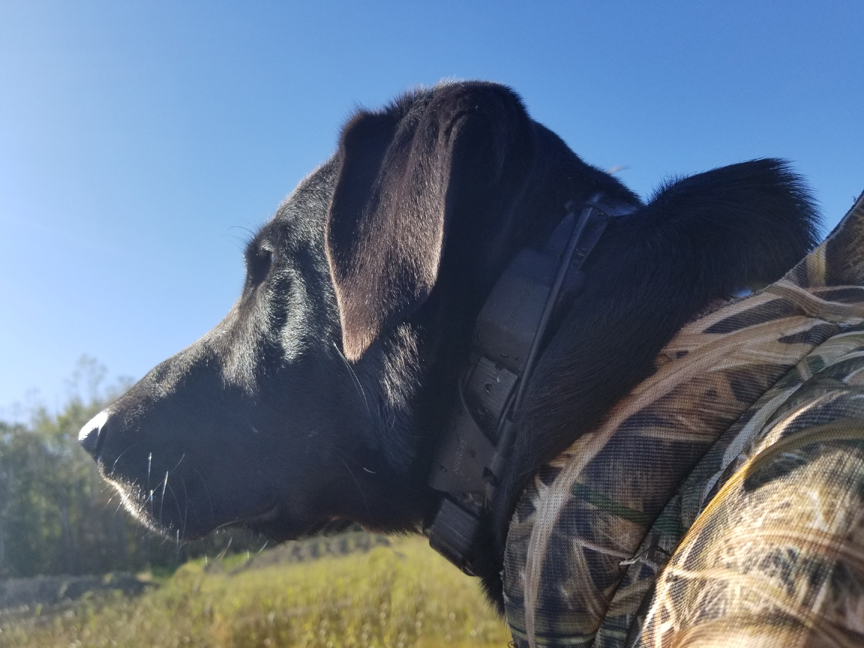
This is where one of the most unique fall regulations comes into play: you can use a dog to hunt turkeys in the fall. A well-trained dog is incredibly effective at locating and scattering a flock. After the flock is busted, you set up near the scatter point, conceal yourself, and wait. Within an hour or so, the birds will start calling to each other, trying to get back together. This is when your calling skills come into play. But you won't be using love-sick yelps; you'll be making the soft kee-kee runs of a lost young turkey or the simple clucks and assembly yelps of a hen gathering her flock.
For concealment, you have several options. You can hunt from an elevated platform on both public and private lands using bows, crossbows, or firearms (elevated platforms are only permitted on public land from Sept. 1 to March 1, and the DNR recommends using a fall arrest system for safety). You can also use a ground blind, which can be placed on public land from Sept. 15 through Nov. 14, giving you plenty of flexibility in your setup timing.
This tactic also explains the regulations around calls and decoys. You can't use or even have an electronic turkey call in the woods. You must make those flocking sounds yourself.
Likewise, mechanical and electronic decoys are illegal. You can use stationary decoys, and a decoy that moves solely by the power of the wind is fine – think of a windsock or similar decoy body anchored at a fixed point, whose only motion comes from natural wind. However, another key rule prohibits stalking a turkey using a handheld decoy or silhouette. The law is designed to promote a stationary, calling-based hunt and to discourage the potentially unsafe practice of stalking birds in the open with a handheld decoy.
Whether you're setting up after a flock bust or sitting on a travel corridor between a roost and a food source, you need to be patient as the scattered flock regroups. You might see a bird fly up into a tree to get a better vantage point. Be patient. There is a hard-and-fast rule: you cannot shoot a turkey while it is in a tree. You must wait for it to come back to the ground.
The Pitfalls: Critical Rules You Can't Ignore
This new season comes with a few major "gotchas" that can turn a great day in the woods into a very expensive one. These are the rules you must get right.
Baiting Laws and the Double Ticket Disaster
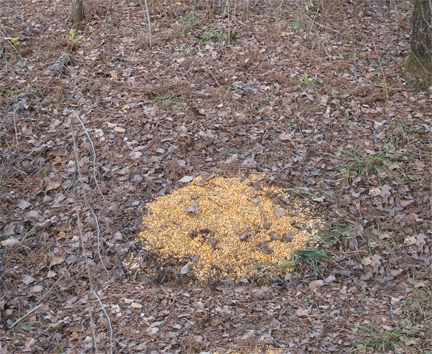
This is arguably the most critical rule to understand, especially for deer hunters. You cannot use bait to aid in the taking of a turkey during the fall season. This doesn't apply to standing agricultural crops or naturally growing grains, fruits, and vegetables, but it absolutely applies to a pile of corn, oats, sugar beets, or any other bait you put out.Here's where it gets serious. Deer baiting is illegal throughout the entire Lower Peninsula. In the Upper Peninsula, deer baiting is legal during certain periods (September 15 to January 1), and there are limited exceptions for hunters with disabilities during the Liberty and Independence hunts. However, even if you're in one of those situations where deer baiting is legal, you still cannot hunt turkeys over that same bait.
If you're hunting from your deer blind over a bait pile and also have a fall turkey license, hoping a bird might come by, you are in a legal minefield. A conservation officer could issue you two separate violations from that single bait pile: one for hunting deer over bait, and one for hunting turkey over bait. This "double ticket" scenario comes with severe penalties.
Violations are misdemeanors, with fines up to $1,000 per offense, potential jail time up to 90 days, and license revocation for up to five years. Furthermore, the reimbursement to the state for unlawful taking of wild turkey is $1,000 per animal, plus an additional $1,000 for a turkey with a beard. A single pile of corn could end up costing you thousands of dollars and your right to hunt. The bottom line is simple: if you're fall turkey hunting, do not hunt anywhere near bait.
Tagging: Do It Immediately, Do It Right
The moment after the shot is filled with adrenaline, but you must follow the tagging procedure to the letter. Immediately after harvesting and before moving the turkey, you must validate your tag. Don't wait until after you take photos. Don't wait until you get back to the truck. Do it right there, right then.If you have a paper tag: You must physically notch out the appropriate information as instructed on the paper kill tag, then securely attach it to the turkey's leg. The DNR recommends laying a strong piece of wire or cord across the back of the paper kill tag so the tag can be folded in half and taped in place as needed, or putting a wire or cord through pre-punched holes if available. Don't stick or wrap the paper kill tag directly onto the leg. Tie the wire or cord to the turkey's leg so the tag remains securely attached and completely legible. The tag must remain attached until you process or butcher the turkey, or until it's accepted for processing by a commercial processor or taxidermist.
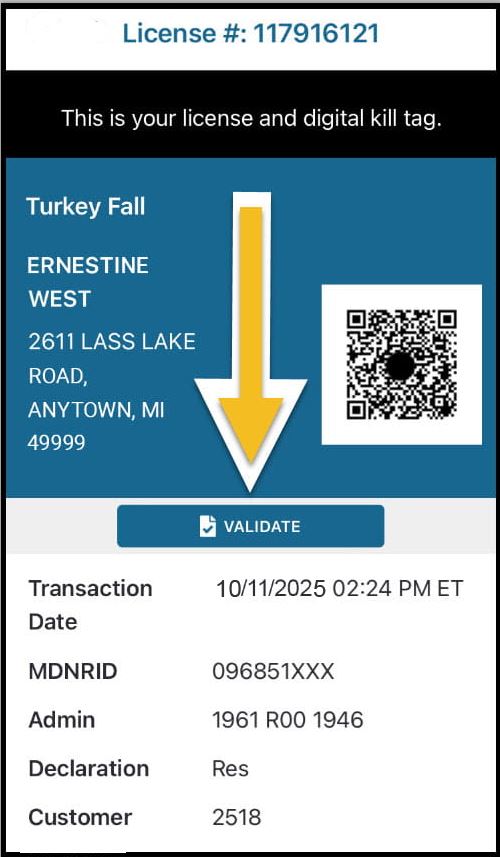
If you have an eHarvest tag: You must open the Michigan DNR Hunt Fish app on your phone, select your fall turkey eHarvest tag, click "Validate Harvest," enter the harvest date, and select "Submit Validation" once you've ensured the date is correct. Once you've completed the electronic validation, you do not need to attach a physical tag to the harvested turkey.
Getting the tagging wrong isn't just a paperwork error – it can void your harvest and result in serious violations. The technology is designed to make it easier, but the responsibility remains entirely yours.
Beyond the Basics: Additional Regulations to Know
While the main rules cover most hunting situations, there are additional regulations worth understanding. You cannot transport or possess a turkey unless it's properly tagged (for paper tags) or electronically validated (for eHarvest). This means no moving the bird for better photos, no taking it to show friends, nothing until that tag is validated and properly attached.
The penalties for violations extend beyond just fines and license suspension. Conservation officers can confiscate equipment, and the financial costs are devastating: $1,000 reimbursement per unlawfully taken turkey, plus an additional $1,000 for any turkey with a beard. Combined with fines up to $1,000 per violation and potential jail time, a single mistake can cost thousands of dollars and years of lost hunting privileges. These aren't arbitrary rules – they're designed to ensure sustainable harvest and fair chase principles that keep this hunting opportunity available for future generations.
The expanded fall season also means more hunters in the woods during what's traditionally been deer archery season. Be extra vigilant about safety, know what's beyond your target, and remember that while you're exempt from hunter orange requirements, other hunters may not immediately recognize you as a turkey hunter.
Even though there are rules - it's still fun!
For us turkey hunters, this expanded season is exciting. Like any hunting season, it's full of rules that we have to follow. The price of the license seems reasonable and I believe that many sales will happen because bow hunters will buy the license "Just in case I see one!"
I hope that most bow hunters do buy a license and I hope that they do indeed see turkeys. For those of us that like to chase them, these turkeys are going to be surprised this fall!
We're at a point where turkeys are just about everywhere in Michigan - stretching from Southern farm fields to the Northern hardwoods. Now that you know all about this upcoming season - where are you going to hunt?